How-to
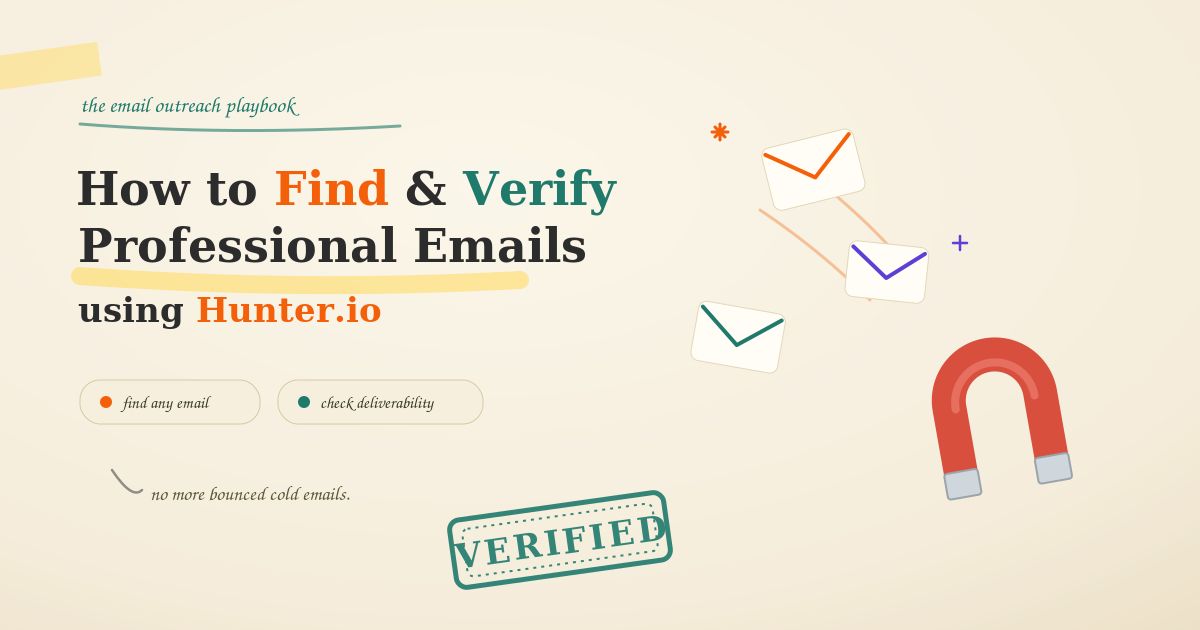
How to Find and Verify Professional Email Addresses Using Hunter.io
Deals Stacks
How to Find and Verify Professional Email Addresses Using Hunter.io
Finding someone’s professional email address sounds simple until you actually need to do it.
You may know the person’s name, job title, and company, but their contact information is nowhere to be found. You could search through company pages, try different email combinations, or spend time checking multiple sources. Even if you eventually find an address, you still need to know whether it is likely to work.
Hunter.io is designed to make this process easier.
With tools such as Domain Search, Email Finder, and Email Verifier, Hunter.io helps users discover professional contact information and check email addresses before using them for outreach.
In this how-to guide, we’ll focus on one specific goal: how to find a professional email address and verify it using Hunter.io.
Before You Start: Know What Information You Have
The best way to start depends on what you already know.
There are three common situations.
You may know only the company you want to contact.
You may know the person’s name and company.
Or you may already have an email address and simply want to check it.
Hunter.io provides a different tool for each situation.
If you know the company, start with Domain Search.
If you know the person’s name and company, use Email Finder.
If you already have an email address, use Email Verifier.
Choosing the correct starting point can save time.
Step 1: Identify the Right Person to Contact
Before searching for an email address, decide who you actually need to reach.
This is one of the most overlooked parts of prospecting.
Imagine that your company sells HR software.
Finding a random employee at a target company will not necessarily help. You probably need someone working in HR, People Operations, Talent Acquisition, or another relevant decision-making role.
Similarly, if you offer SEO services, someone responsible for marketing or organic growth may be more relevant.
Start by asking:
What problem does my product or service solve?
Then ask:
Who at this company is most likely to care about that problem?
This simple step can prevent you from building a large but irrelevant contact list.
Step 2: Find the Company’s Official Domain
If you are researching a company, identify its official website domain.
For example, if the company’s website is:
companyname.com
That main domain is what you would typically use for a domain-based search.
Be careful with companies that have similar names.
Confirm that you have the correct organization before searching.
This matters because using the wrong domain could lead you to completely unrelated contacts.
Once you have confirmed the correct domain, you are ready to use Hunter’s Domain Search.
Step 3: Use Hunter.io Domain Search
Open Domain Search in Hunter.io.
Enter the company’s domain into the search field.
Run the search.
Hunter will display available professional email information associated with that domain, depending on what data is available.
You may also see supporting details that can help you understand the contacts and evaluate the results.
Do not immediately copy every email address.
Your goal is not to collect the maximum number of contacts.
Your goal is to find the most relevant person.
Review names, roles, departments, and other available information.
If you are trying to sell a marketing product, focus on marketing-related contacts.
If you are looking for a partnership opportunity, identify someone whose role is relevant to partnerships or business development.
This makes your eventual outreach much more targeted.
Step 4: Narrow Your Search to Relevant Contacts
A large organization may have many available contacts.
Filtering is therefore important.
Suppose a Domain Search gives you multiple people from the same company.
Ask yourself:
Who is closest to the problem my product solves?
Who is likely to influence or make the relevant decision?
Is this person’s seniority appropriate for my offer?
Do I have a genuine reason to contact them?
You do not always need to contact the most senior person.
For example, if you sell a specialized SEO tool, an SEO manager may be a more relevant contact than the CEO of a large company.
Choose based on relevance, not simply job-title seniority.
Step 5: Use Email Finder When You Know the Person
Sometimes you already know exactly who you need.
Perhaps you found a relevant professional through company research, an event, an article, or another legitimate source.
You know their name.
You know where they work.
But you do not know their professional email address.
In this situation, use Hunter.io’s Email Finder.
Enter the information requested by the tool, such as the person’s full name and company domain.
Run the search.
Hunter will attempt to identify a professional email address associated with that person.
Review the result carefully.
Depending on the available data, Hunter may provide additional signals or supporting information that can help you assess the result.
Do not assume that every result is automatically correct or permanently current.
Professional information changes over time.
Step 6: Check the Email Before Using It
Now suppose you have found an email address.
Before adding it to an important outreach campaign, consider verifying it.
Why?
Because email data becomes outdated.
People change jobs.
Companies restructure.
Domains change.
Mailboxes become inactive.
Even if an email address looks perfectly formatted, that does not necessarily mean it can currently receive messages.
This is where Email Verifier becomes useful.
Step 7: Verify the Email With Hunter.io
Open Hunter.io’s Email Verifier.
Enter the email address you want to check.
Start the verification.
Hunter evaluates the address using multiple technical checks and provides a result designed to help you assess the email’s status.
Review that result before deciding what to do next.
Verification can help you identify potentially problematic email addresses before outreach.
However, it is important to understand what verification means.
No email verification service can guarantee that a person will read or respond to your email.
Verification is about assessing the address—not predicting engagement.
Step 8: Understand Why Verification Matters
Imagine you have collected 500 potential contacts over several months.
During that time, some people may have changed jobs.
Others may have moved to different departments.
Some company email accounts may have been closed.
If you send messages without checking your data, you may experience unnecessary bounces.
Maintaining cleaner email data can improve the overall quality of your outreach process.
Verification is particularly useful when:
You are working with older contact data.
You have imported contacts from different sources.
You are preparing an important outreach campaign.
You are unsure whether an address is still active.
You have a larger list that needs quality checking.
The goal is not perfection.
The goal is to make more informed decisions about your contact data.
Step 9: Verify Multiple Emails When Needed
Checking addresses individually is fine for a small list.
But imagine checking 1,000 contacts one by one.
That would take a significant amount of time.
Hunter.io provides bulk functionality for larger workflows, subject to current plan features and usage limits.
Before processing a larger list, organize your data carefully.
Remove duplicate contacts.
Delete obviously incomplete entries.
Make sure the information is structured correctly.
Then process the relevant data according to Hunter’s current bulk workflow.
Once complete, review the results rather than automatically treating every contact in exactly the same way.
Bulk processing saves time, but human review is still useful.
Step 10: Organize Your Verified Contacts
Once you have found and checked relevant professional emails, organize them.
Do not leave everything in one random list.
Useful organization can include:
Company name, contact name, job role, professional email, industry, campaign, prospect status, and relevant notes.
You do not necessarily need every field.
Use only the information that helps your workflow.
For example, suppose you run a digital marketing agency.
You could organize prospects into groups such as:
SaaS companies
E-commerce businesses
Local businesses
Professional services
This makes it easier to create outreach that reflects each audience’s actual needs.
Step 11: Research the Prospect Before Contacting Them
This step is essential.
Finding and verifying someone’s professional email does not automatically make them a good prospect.
Before contacting anyone, research the person and company.
Look at what the business does.
Understand the person’s role.
Identify a genuine reason why your message may be relevant.
For example, suppose you sell an email marketing tool.
Instead of sending:
“Hi Sarah, we have an amazing marketing solution. Would you like a demo?”
You could build your message around a specific, relevant challenge faced by businesses like theirs.
The exact message should depend on genuine research.
Avoid pretending to know something about a person or company when you do not.
Good personalization is based on context, not artificial compliments.
Step 12: Write a Simple Outreach Email
Your outreach does not need to be complicated.
In fact, shorter and clearer is often better.
A useful structure is:
Relevant opening: Explain why you are contacting this specific person.
Problem or opportunity: Mention something that may genuinely matter to them.
Value: Briefly explain how you may be able to help.
Next step: Make one simple request.
Avoid spending half the email describing your company.
The recipient wants to understand why the message matters to them.
Also avoid excessive buzzwords.
Instead of saying:
“Our revolutionary AI-powered next-generation ecosystem transforms business scalability,”
say clearly what the product actually does.
Human language is easier to understand and usually more trustworthy.
Step 13: Don’t Send the Same Email to Everyone
Finding professional emails at scale makes mass outreach technically easy.
That does not mean sending the exact same generic email to everyone is a good strategy.
Different prospects have different needs.
A startup founder may care about affordability and speed.
A sales manager may care about team productivity.
A large-company executive may care about scalability, security, or business impact.
Your core offer may remain the same, but the message should reflect the recipient.
You can create templates for efficiency, but leave room for meaningful personalization.
Step 14: Use Follow-Ups Carefully
Not receiving a reply does not always mean someone is uninterested.
People are busy.
Emails get missed.
A reasonable follow-up can help.
However, follow-ups should remain respectful.
Avoid sending repeated messages every day.
Also avoid making every follow-up say only:
“Just checking in.”
Add something useful.
You might clarify your original message, provide a helpful resource, or briefly explain another relevant benefit.
If someone asks not to be contacted, respect their preference.
Step 15: Keep Your Contact Data Updated
Finding and verifying an email once does not mean it will remain accurate forever.
Professional data changes constantly.
If you maintain a long-term prospect database, review older contact information periodically.
This is especially important before launching a new campaign using an old list.
Ask:
When was this contact added?
Is the person still at the same company?
Is their role still relevant?
Has the email been checked recently?
Keeping your data clean can save time later.
Step 16: Use Contact Information Responsibly
Professional email discovery should always be used responsibly.
Different countries and regions have different privacy, data protection, and electronic communication requirements.
Your obligations may depend on where your business operates, where recipients are located, and the nature of your outreach.
Follow applicable laws and platform policies.
More broadly, use common sense.
Ask whether your message is relevant and whether you have a legitimate reason to contact the person.
Do not treat email discovery as permission to send unlimited promotional messages.
Responsible outreach protects both recipients and your business reputation.
Example: Finding a Marketing Contact
Imagine you run a B2B software company and want to reach the marketing team at a potential customer.
Your workflow could look like this:
First, identify the target company’s official domain.
Next, search the domain using Hunter.io’s Domain Search.
Review available contacts and focus on people working in relevant marketing roles.
If you already know the name of the marketing decision-maker but cannot find their email, use Email Finder.
Once you have a professional address, use Email Verifier to assess it.
Then research the person and company before writing your message.
Finally, create a short outreach email explaining why your solution may be relevant.
Notice that only part of this process is about finding the email.
Targeting and relevance are equally important.
Domain Search vs Email Finder vs Email Verifier
These three features are easy to confuse, so remember this simple rule:
Domain Search:
“I know the company. Who can I contact?”
Email Finder:
“I know the person. What is their professional email?”
Email Verifier:
“I have an email. Can I assess whether it appears valid?”
Once you understand these three questions, choosing the right Hunter.io feature becomes much easier.
Common Mistakes to Avoid
One common mistake is collecting contacts before defining the target audience.
This produces large but low-quality lists.
Another mistake is assuming that every email found is automatically ready for outreach.
Review and verify important information.
Avoid sending generic messages simply because automation makes it easy.
Do not contact people who have no meaningful connection to your offer.
And never assume that email verification guarantees a response.
The purpose of these tools is to improve your workflow—not replace good judgment.
Frequently Asked Questions
How can I find someone’s professional email with Hunter.io?
If you know the person’s name and company, use Hunter.io’s Email Finder. Enter the requested identifying information and review the available result.
What if I only know the company name?
Find the company’s correct domain and use Domain Search to explore available professional contacts associated with that organization.
How do I verify an email using Hunter.io?
Enter the email address into Email Verifier and run the check. Review the returned status and information before deciding whether the address is appropriate for your workflow.
Can I verify a large email list?
Hunter.io provides bulk functionality for larger email-related workflows. Exact limits and availability depend on the current plan and product terms.
Does a verified email guarantee delivery?
No. Verification helps assess an email address based on available technical signals, but conditions can change and no service can guarantee delivery, inbox placement, or a response.
Can I use Hunter.io for B2B lead generation?
Yes. Hunter.io can support B2B prospecting through company discovery, professional contact research, email finding, verification, and outreach-related features.
Conclusion
Finding a professional email address is much easier when you use the right process.
If you know the company, start with Domain Search.
If you know the person, use Email Finder.
Once you have an email address, use Email Verifier when appropriate to assess the contact information before outreach.
But finding an email should never be the final goal.
The real goal is to identify the right person, understand why your message is relevant, and communicate in a clear and respectful way.
Hunter.io can make the technical side of professional email discovery and verification more efficient. The quality of your targeting, research, and communication is what turns that contact information into meaningful business opportunities.