Comparison
Webflow vs WordPress: Which Website Builder and CMS Is Better?
Deals Stacks

Webflow vs WordPress: Which Website Builder and CMS Is Better?
Webflow and WordPress are two popular platforms for building websites, but they approach website creation in very different ways.
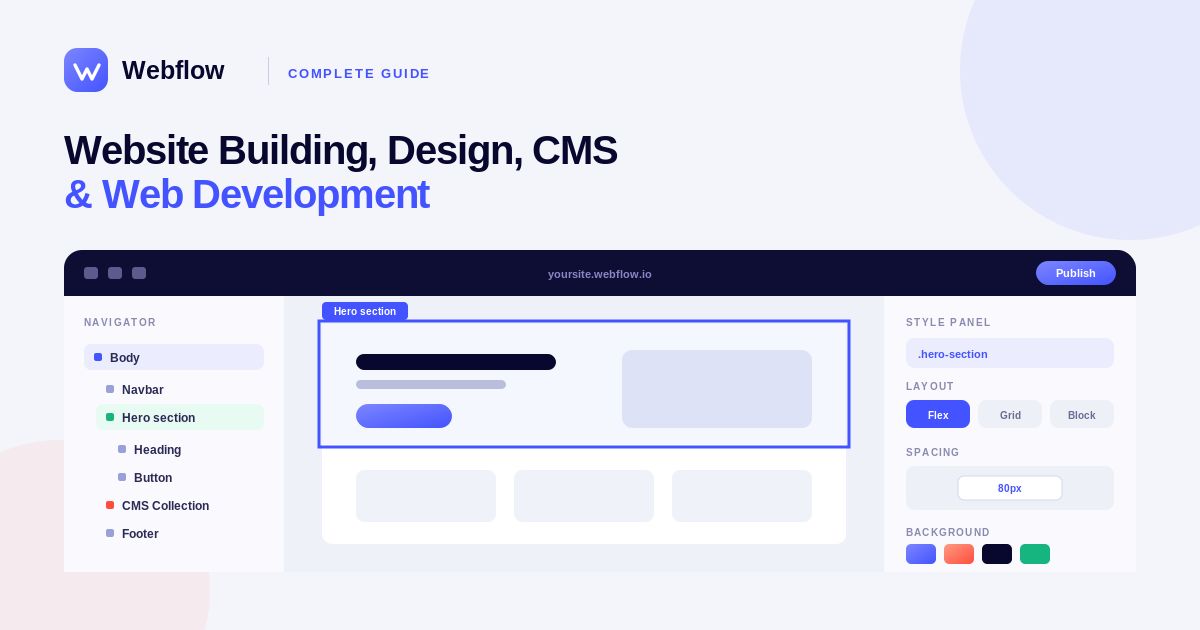
Webflow combines visual website design, CMS, hosting, interactions, and development tools in one platform. WordPress is an open-source content management system with a large ecosystem of themes, plugins, hosting providers, and developers.
Both can be used to build professional websites, blogs, business websites, ecommerce stores, portfolios, and content-driven platforms. However, the better option depends on how much design control, flexibility, maintenance, and customization you need.
Webflow vs WordPress at a Glance
Feature | Webflow | WordPress |
|---|---|---|
🎨 Visual Design | 🏆 Excellent | ⭐ Good |
⚙️ Customization | 🏆 Advanced | 🏆 Very Advanced |
📝 CMS | 🏆 Strong | 🏆 Excellent |
🔍 SEO | ⭐⭐ Advanced | 🏆 Highly Flexible |
🌐 Hosting | 🏆 Built-In | ⚡ Third-Party / Managed Options |
🎬 Animations | 🏆 Excellent | ✅ Available |
🛒 Ecommerce | ✅ Available | 🏆 Excellent |
🔌 Plugins & Extensions | ⭐ Good | 🏆 Huge Ecosystem |
🧑💻 Coding Control | 🏆 Strong | 🏆 Very Strong |
🔒 Maintenance | 🏆 Low Maintenance | ⚠️ More Maintenance |
📱 Responsive Design | 🏆 Excellent | ⭐ Good |
🚀 Ease of Launch | 🏆 Easy | ⭐ Moderate |
💡 Best For | Design-focused websites | Flexible content & customization |
Website Design
Webflow is designed around visual website creation. Designers can build layouts and style elements while working with concepts such as CSS, Flexbox, Grid, spacing, typography, and responsive breakpoints.
WordPress provides themes and page builders that make website design easier, but the exact experience depends heavily on the theme and plugins being used.
For designers who want detailed visual control without manually writing every line of code, Webflow has a strong advantage.
🏆 Winner: Webflow
Customization
WordPress is highly customizable because of its open-source architecture and massive ecosystem of plugins and themes.
Users can extend WordPress with plugins for almost every type of functionality, including SEO, ecommerce, forms, memberships, analytics, and marketing.
Webflow also provides extensive design and development flexibility, including custom code and integrations, but it operates within the Webflow ecosystem.
🏆 Winner: WordPress for overall extensibility.
CMS
Both platforms provide content management capabilities.
Webflow CMS is designed around structured content collections. It works particularly well for websites with recurring content such as:
Blog posts
Case studies
Team members
Projects
Resources
Events
WordPress has been a major CMS platform for many years and provides extensive content management capabilities through posts, pages, custom post types, plugins, and themes.
🏆 Winner: WordPress for overall CMS flexibility.
SEO
Both platforms can be used to create SEO-friendly websites.
Webflow provides built-in controls for:
Page titles
Meta descriptions
URLs
Alt text
Sitemaps
Redirects
Structured website architecture
WordPress provides SEO flexibility through its core functionality, themes, plugins, and custom development.
The final SEO performance of either platform depends on factors such as content quality, technical optimization, website speed, internal linking, backlinks, and search strategy.
🏆 Winner: Tie — both are strong.
Hosting
Webflow provides hosting as part of its platform, allowing users to design, manage, and publish websites within the same ecosystem.
WordPress itself is software that needs to be hosted. Users can select from numerous hosting providers or choose managed WordPress hosting.
Webflow therefore offers a more integrated experience, while WordPress provides greater freedom in choosing hosting infrastructure.
🏆 Winner: Webflow for simplicity.
💡 WordPress for hosting flexibility.
Animations and Interactions
Webflow is particularly strong for animations and interactions.
Designers can create:
Scroll animations
Hover effects
Page transitions
Image reveals
Moving elements
Interactive navigation
Advanced visual effects
WordPress can also support animations through themes, plugins, page builders, and custom development, but the implementation depends on the setup.
🏆 Winner: Webflow
Ecommerce
Both platforms can support ecommerce websites.
Webflow provides ecommerce capabilities within its platform and allows designers to customize the storefront experience.
WordPress can be transformed into a powerful ecommerce platform using solutions such as WooCommerce and other ecommerce plugins.
For businesses that need extensive ecommerce customization, WordPress has a very large ecosystem.
🏆 Winner: WordPress
Plugins and Extensions
This is one of WordPress’s biggest advantages.
WordPress has a huge ecosystem of plugins that can add functionality to almost any type of website.
Webflow provides integrations and apps, but its ecosystem is more controlled compared with WordPress.
If your website requires a specialized plugin or a very specific third-party feature, WordPress is more likely to have an available solution.
🏆 Winner: WordPress
Ease of Use
Webflow can be relatively easy for designers who understand basic web-design concepts, but beginners may need time to understand classes, layout systems, responsive design, and other concepts.
WordPress can be easier to start with when using a ready-made theme or page builder. However, managing plugins, themes, hosting, updates, and security can make WordPress more complicated over time.
🏆 Winner: Webflow for an integrated website-building workflow.
Maintenance
Webflow is a hosted platform, so users don’t have to manage the same level of server, plugin, and WordPress-core maintenance associated with self-hosted WordPress.
WordPress websites may require regular:
Plugin updates
Theme updates
Core updates
Security monitoring
Backups
Hosting management
🏆 Winner: Webflow for lower maintenance.
Responsive Design
Webflow gives designers detailed control over responsive layouts and allows them to customize how elements behave across different screen sizes.
WordPress websites can also be fully responsive, but responsiveness depends on the selected theme, page builder, and implementation.
🏆 Winner: Webflow
Performance
Website performance depends heavily on how a website is designed and optimized.
Webflow provides managed hosting and a controlled environment, which can simplify performance management.
WordPress can also deliver highly optimized websites, but performance can be affected by themes, plugins, hosting, scripts, images, and configuration.
🏆 Winner: Webflow for a more controlled environment.
Scalability
Both platforms can scale, but in different ways.
Webflow can scale well for marketing websites, content-driven websites, and professional business websites.
WordPress can scale across a much wider range of use cases because its open architecture allows developers to customize hosting, databases, plugins, themes, and infrastructure.
For highly customized applications, WordPress provides greater flexibility.
🏆 Winner: WordPress for maximum flexibility.
Security
Webflow’s hosted architecture reduces the need for users to manage many of the technical security tasks associated with self-hosted websites.
With WordPress, security depends significantly on hosting, plugins, themes, updates, configurations, and administrator practices.
WordPress can be secure when properly maintained, but it requires more active management.
🏆 Winner: Webflow for easier day-to-day security management.
Webflow vs WordPress for Designers
Webflow is an excellent choice for designers who want:
Detailed visual control
Responsive design
Custom animations
Professional layouts
CMS functionality
Integrated hosting
🏆 Best Choice: Webflow
Webflow vs WordPress for Bloggers
WordPress has a long history as a blogging and publishing platform and provides extensive content-management capabilities.
It also offers numerous plugins for SEO, newsletters, memberships, analytics, and publishing workflows.
🏆 Best Choice: WordPress
Webflow vs WordPress for Businesses
Both platforms can work well for business websites.
Webflow is particularly attractive for businesses that prioritize design, performance, branding, and low maintenance.
WordPress can be better for businesses that require extensive plugins, integrations, or custom functionality.
🏆 Best Choice: Depends on requirements
Webflow vs WordPress for Ecommerce
For basic and design-focused ecommerce websites, Webflow can be a good option.
For larger or highly customized ecommerce operations, WordPress has an advantage because of its extensive ecommerce ecosystem and flexibility.
🏆 Best Choice: WordPress
Webflow vs WordPress: Pros and Cons
Webflow
Pros
🏆 Powerful visual design
🏆 Excellent responsive controls
🏆 Strong animations
🏆 Built-in hosting
✅ CMS functionality
✅ SEO controls
✅ Custom code support
🔧 Lower maintenance
Cons
Learning curve for complete beginners
Less extensive plugin ecosystem
Advanced projects may require Webflow expertise
Costs can increase with project requirements
WordPress
Pros
🏆 Huge plugin ecosystem
🏆 Highly customizable
🏆 Flexible CMS
🏆 Strong ecommerce ecosystem
🏆 Large developer community
✅ Extensive themes
✅ Flexible hosting options
✅ Suitable for many website types
Cons
Requires more maintenance
Plugin conflicts can occur
Security requires active management
Performance depends heavily on configuration
Which One Should You Choose?
Choose Webflow if you want:
🎨 High-quality visual design
🎬 Advanced animations
📱 Strong responsive controls
🌐 Integrated hosting
🔧 Lower maintenance
💼 Professional marketing websites
🖥️ Designer-friendly development
Choose WordPress if you want:
🔌 A huge plugin ecosystem
🛒 Advanced ecommerce options
📝 Flexible content management
🧩 Extensive customization
🌐 More hosting choices
👨💻 Large developer ecosystem
🚀 Maximum platform flexibility
Final Verdict
Webflow is the better choice for design-focused websites, visual development, responsive layouts, animations, and a low-maintenance hosted experience.
WordPress is the better choice for maximum flexibility, extensive plugins, ecommerce, content management, and highly customized websites.
If your priority is beautiful visual design with an integrated website-building and hosting workflow, Webflow is an excellent option.
If your priority is maximum customization and access to a huge ecosystem of plugins, themes, developers, and hosting options, WordPress is the stronger choice.
Ultimately, the right platform depends on your website’s goals, technical requirements, budget, content strategy, and how much control you want over the underlying infrastructure.